
Pituitary dysfunction associated with tuberculous meningitis
DOI:
https://doi.org/10.5935/2764-734X.e20250462Keywords:
Tuberculosis, Endocrine, Tuberculosis,, Central Nervous System, Hypophysitis, Case reportAbstract
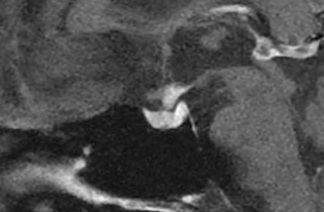
Tuberculosis can lead to endocrine/metabolic changes in different glands, with varying clinical presentations and forms, while the incidence of pituitary involvement is unknown. We present the case of a patient with a recent diagnosis of AIDS who, upon presenting with tuberculous meningitis, developed diabetes insipidus, hypogonadotropic hypogonadism, and hyperprolactinemia. The diagnosis of hypophysitis was established, but there was no full recovery of hormonal function even after specific treatment.
Downloads
References
1. Vinnard C, Blumberg EA. Endocrine and Metabolic Aspects of Tuberculosis. Microbiol Spectr. 2017 Jan;5(1):10.1128/microbiolspec.tnmi7-0035-2016. DOI: 10.1128/microbiolspec.tnmi7-0035-2016
2. Beatrice AM, Selvan C, Mukhopadhyay S. Pituitary dysfunction in infective brain diseases. Indian J Endocrinol Metab. 2013 Dec;17(Suppl 3):S608-11. DOI: 10.4103/2230-8210.123546
3. Lam KS, Sham MM, Tam SC, Ng MM, Ma HT. Hypopituitarism after tuberculous meningitis in childhood. Ann Intern Med. 1993 May 1;118(9):701-6. DOI: 10.7326/0003-4819-118-9-199305010-00007
4. Dhanwal DK, Vyas A, Sharma A, Saxena A. Hypothalamic pituitary abnormalities in tubercular meningitis at the time of diagnosis. Pituitary. 2010 Dec;13(4):304-10. DOI: 10.1007/s11102-010-0234-7
5. Ranjan A, Chandy MJ. Intrasellar tuberculoma. Br J Neurosurg. 1994;8(2):179-85. DOI: 10.3109/02688699409027964
6. Cherian A, Ajitha KC, Iype T, Divya KP. Neurotuberculosis: an update. Acta Neurol Belg. 2021 Feb;121(1):11-21. DOI: 10.1007/s13760-020-01575-0
7. Correia-Neves M, Fröberg G, Korshun L, Viegas S, Vaz P, Ramanlal N, et al. Biomarkers for tuberculosis: the case for lipoarabinomannan. Biomarkers for tuberculosis: the case for lipoarabinomannan. ERJ Open Res. 2019 Feb 11;5(1):00115-2018. DOI: 10.1183/23120541.00115-2018
8. Schaller MA, Wicke F, Foerch C, Weidauer S. Central Nervous System Tuberculosis: Etiology, Clinical Manifestations and Neuroradiological Features. Clin Neuroradiol. 2019 Mar;29(1):3-18. DOI: 10.1007/s00062-018-0726-9
9. Siddiqi OK, Birbeck GL, Ghebremichael M, Mubanga E, Love S, Buback C, et al. Prospective Cohort Study on Performance of Cerebrospinal Fluid (CSF) Xpert MTB/RIF, CSF Lipoarabinomannan (LAM) Lateral Flow Assay (LFA), and Urine LAM LFA for Diagnosis of Tuberculous Meningitis in Zambia. J Clin Microbiol. 2019 Jul 26;57(8):e00652-19. DOI: 10.1128/JCM.00652-19
10. Sulaiman T, Medi S, Erdem H, Senbayrak S, Ozturk-Engin D, Inan A, et al. The diagnostic utility of the “Thwaites’ system” and “lancet consensus scoring system” in tuberculous vs. non-tuberculous subacute and chronic meningitis: multicenter analysis of 395 adult patients. BMC Infect Dis. 2020 Oct 23;20(1):788. DOI: 10.1186/s12879-020-05502-9
11. Brasil. Ministério da Saúde. Secretaria de Vigilância em Saúde. Departamento de Vigilância das Doenças Transmissíveis. Manual de recomendações para o controle da tuberculose no Brasil. 2a ed. Brasília: Ministério da Saúde; 2019 [acesso 2025 fev 20]. Disponível em: https://www.gov.br/saude/pt-br/centrais-de-conteudo/publicacoes/svsa/tuberculose/manual-de-recomendacoes-e-controle-da-tuberculose-no-brasil-2a-ed.pdf/view
12. Brasil. Ministério da Saúde. Secretaria de Ciência, Tecnologia, Inovação e Complexo da Saúde. Secretaria de Vigilância em Saúde e Ambiente. Protocolo Clínico e Diretrizes Terapêuticas para Manejo da Infecção pelo HIV em Adultos: Módulo 2: Coinfecções e Infecções Oportunistas [recurso eletrônico]. Brasília: Ministério da Saúde; 2023 [acesso 2025 fev 20]. Disponível em: https://www.gov.br/aids/pt-br/central-de-conteudo/pcdts/PCDT_HIV_Modulo_2_2024_eletrnicoISBN.pdf
13. Delsedime M, Aguggia M, Cantello R, Chiado Cutin I, Nicola G, Torta R, et al. Isolated hypophyseal tuberculoma: case report. Clin Neuropathol. 1988 Nov/Dec;7(6):311-3.
14. Srisukh S, Tanpaibule T, Kiertiburanakul S, Boongird A, Wattanatranon D, Panyaping T, et al. Pituitary tuberculoma: A consideration in the differential diagnosis in a patient manifesting with pituitary apoplexy-like syndrome. IDCases. 2016 Jul 29;5:63-6. DOI: 10.1016/j.idcr.2016.07.012
15. Tanimoto K, Imbe A, Shishikura K, Imbe H, Hiraiwa T, Miyata T, et al. Reversible hypopituitarism with pituitary tuberculoma. Intern Med. 2015;54(10):1247-51. DOI: 10.2169/internalmedicine.54.3435
Downloads
Published
How to Cite
Issue
Section
License
Copyright (c) 2025 Infections in Evidence

This work is licensed under a Creative Commons Attribution 4.0 International License.
All users may freely read, download, share, and adapt this scientific product for any purpose (even commercial ones), provided that due credit is given to the authors and the original publication, and that any alterations are duly indicated.
> Ethics
All articles published herein have received ethical approval from the National Research Ethics System (formerly CEP/CONEP system) based on Federal Law 14.874/24 and other specific Brazilian regulations, or a similar document attesting to the knowledge and authorization from the institution of origin in the case of foreign works.
The authors declare that there is no sponsorship or conflict of interest of any kind, unless otherwise indicated in the body of the article.
It is worth noting that case reports are a valuable learning resource for the scientific community, but should not be used in isolation to guide diagnostic or therapeutic options in clinical practice or health policies