When biopsy fails, DNA speaks: a difficult diagnosis of cutaneous tuberculosis
DOI:
https://doi.org/10.5935/2764-734X.e20250872-enKeywords:
Tuberculosis, Cutaneous, Polymerase Chain Reaction, Mycobacterium tuberculosis, Case Report, Tuberculose Cutânea, Reação em Cadeia da Polimerase, Mycobacterium tuberculo, Relato de CasoAbstract
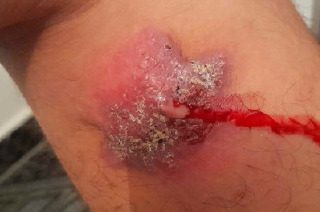
Cutaneous tuberculosis presents a diagnostic challenge. This report describes the case of an adolescent with a chronic, single verrucous lesion that persisted for years without resolution. Despite an epidemiological link to tuberculosis, the absence of corroborating evidence hindered a definitive diagnosis (multiple inconclusive microbiological, histological, and molecular examinations had been performed). The elucidation occurred through a new biopsy in which quantitative polymerase chain reaction (qPCR) was used to detect Mycobacterium tuberculosis DNA in fresh tissue. Once the diagnosis was confirmed, the patient received standard tuberculosis treatment and experienced complete resolution of the lesion.
Downloads
References
VASHISHT, P.; SAHOO, B.; KHURANA, N.; REDDY, B. S. Cutaneous tuberculosis in children and adolescents: a clinicohistological study. Journal of the European Academy of Dermatology and Venereology, v. 21, n. 1, p. 40-47, 2007. DOI: 10.1111/j.1468-3083.2006.01858.x
BRASIL. Ministério da Saúde. Secretaria de Vigilância em Saúde e Ambiente. Departamento de HIV, Aids, Tuberculose, Hepatites Virais e Infecções Sexualmente Transmissíveis. Boletim Especial Tuberculose em Crianças e Adolescentes. Brasília: Ministério da Saúde, 2024. Disponível em: https://www.gov.br/aids/pt-br/central-de-conteudo/boletins-epidemiologicos/2024/boletim-especial-tb-em-criancas-e-adolescentes.pdf/view
WEDY, G. F.; PASSERO, L. F. D.; CRIADO, P. R.; BELDA, W. Jr. A case of tuberculosis verrucosa cutis in Brazil undiagnosed for 15 years. Brazilian Journal of Infectious Diseases, v. 25, n. 3, p. 101593, 2021. DOI: 10.1016/j.bjid.2021.101593
KHADKA, P.; KOIRALA, S.; THAPALIYA, J. Cutaneous Tuberculosis: Clinicopathologic Arrays and Diagnostic Challenges. Dermatology Research and Practice, 2018, Article ID 7201973. DOI: 10.1155/2018/7201973
TERZIROLI BERETTA-PICCOLI, B.; MAINETTI, C.; PEETERS, M. A.; LAFFITTE, E. Cutaneous Granulomatosis: a Comprehensive Review. Clinical Reviews in Allergy & Immunology, v. 54, n. 1, p. 131-146, 2018. DOI: 10.1007/s12016-017-8666-8
AGARWAL, P.; SINGH, E. N.; AGARWAL, U. S.; MEENA, R.; PUROHIT, S.; KUMAR, S. The role of DNA polymerase chain reaction, culture and histopathology in the diagnosis of cutaneous tuberculosis. International Journal of Dermatology, v. 56, n. 11, p. 1119-1124, 2017. DOI: 10.1111/ijd.13708
MALDONADO-BERNAL, C.; RAMOS-GARIBAY, A.; RIOS-SARABIA, N.; SERRANO, H.; CARRERA, M.; NAVARRETE-FRANCO, G.; et al. Nested Polymerase Chain Reaction and Cutaneous Tuberculosis. American Journal of Dermatopathology, v. 41, n. 6, p. 428-435, 2019. DOI: 10.1097/DAD.0000000000001315
BRASIL. Ministério da Saúde. Secretaria de Vigilância em Saúde e Ambiente. Manual de recomendações para o controle da tuberculose no Brasil. 2. ed. Brasília: Ministério da Saúde, 2022. Disponível em: https://www.gov.br/saude/pt-br/centrais-de-conteudo/publicacoes/svsa/tuberculose/manual-de-recomendacoes-e-controle-da-tuberculose-no-brasil-2a-ed.pdf
OGUSKU, M. M.; SADAHIRO, A.; HIRATA, M. H.; HIRATA, R. D. C.; ZAITZ, C.; SALEM, J. I. PCR in the diagnosis of cutaneous tuberculosis. Brazilian Journal of Microbiology, v. 34, n. 2, p. 165-170, 2003. DOI: 10.1590/S1517-83822003000200012
SENTURK, N.; SAHIN, S.; KOCAGOZ, T. Polymerase chain reaction in cutaneous tuberculosis: is it a reliable diagnostic method in paraffin-embedded tissues? International Journal of Dermatology, v. 41, n. 12, p. 863-866, 2002. DOI: 10.1046/j.1365-4362.2002.01604.x
Downloads
Published
How to Cite
Issue
Section
License
Copyright (c) 2025 Infections in Evidence

This work is licensed under a Creative Commons Attribution 4.0 International License.
All users may freely read, download, share, and adapt this scientific product for any purpose (even commercial ones), provided that due credit is given to the authors and the original publication, and that any alterations are duly indicated.
> Ethics
All articles published herein have received ethical approval from the National Research Ethics System (formerly CEP/CONEP system) based on Federal Law 14.874/24 and other specific Brazilian regulations, or a similar document attesting to the knowledge and authorization from the institution of origin in the case of foreign works.
The authors declare that there is no sponsorship or conflict of interest of any kind, unless otherwise indicated in the body of the article.
It is worth noting that case reports are a valuable learning resource for the scientific community, but should not be used in isolation to guide diagnostic or therapeutic options in clinical practice or health policies